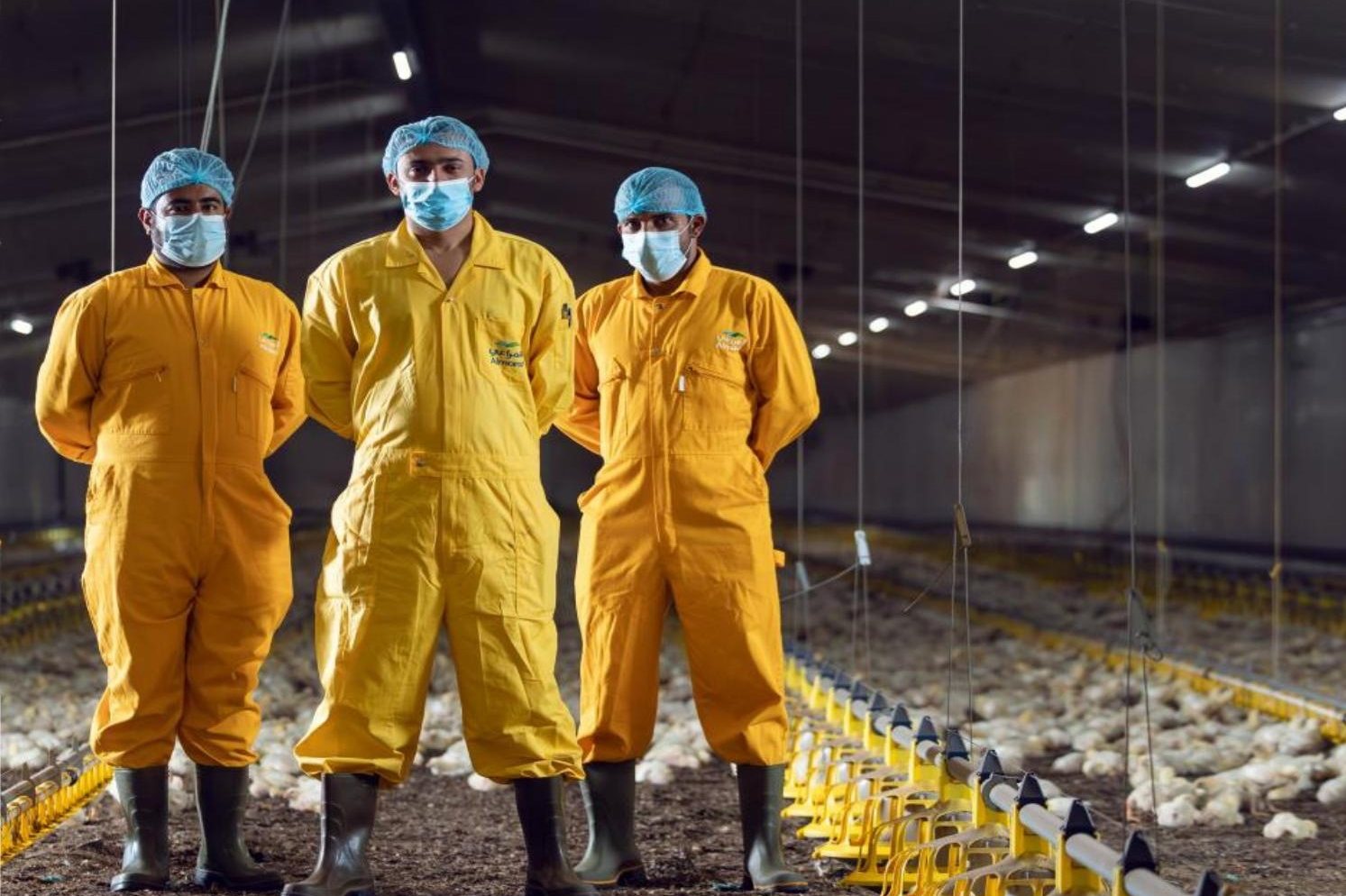
Almarai's second quarter revenue rose 11 percent year on year to SAR 5.868 billion, taking first half revenue to SAR 12.028 billion, up 9 percent. Poultry drove it. Almarai's own Key Takeaway names Poultry and Egypt as the quarter's primary contributors, and Protein, the segment that carries poultry's numbers, was the single largest source of growth in the business, up 16 percent to SAR 1,164 million. Net profit, though, fell 1.7 percent even as revenue grew 11 percent.
What Actually Drove the Quarter
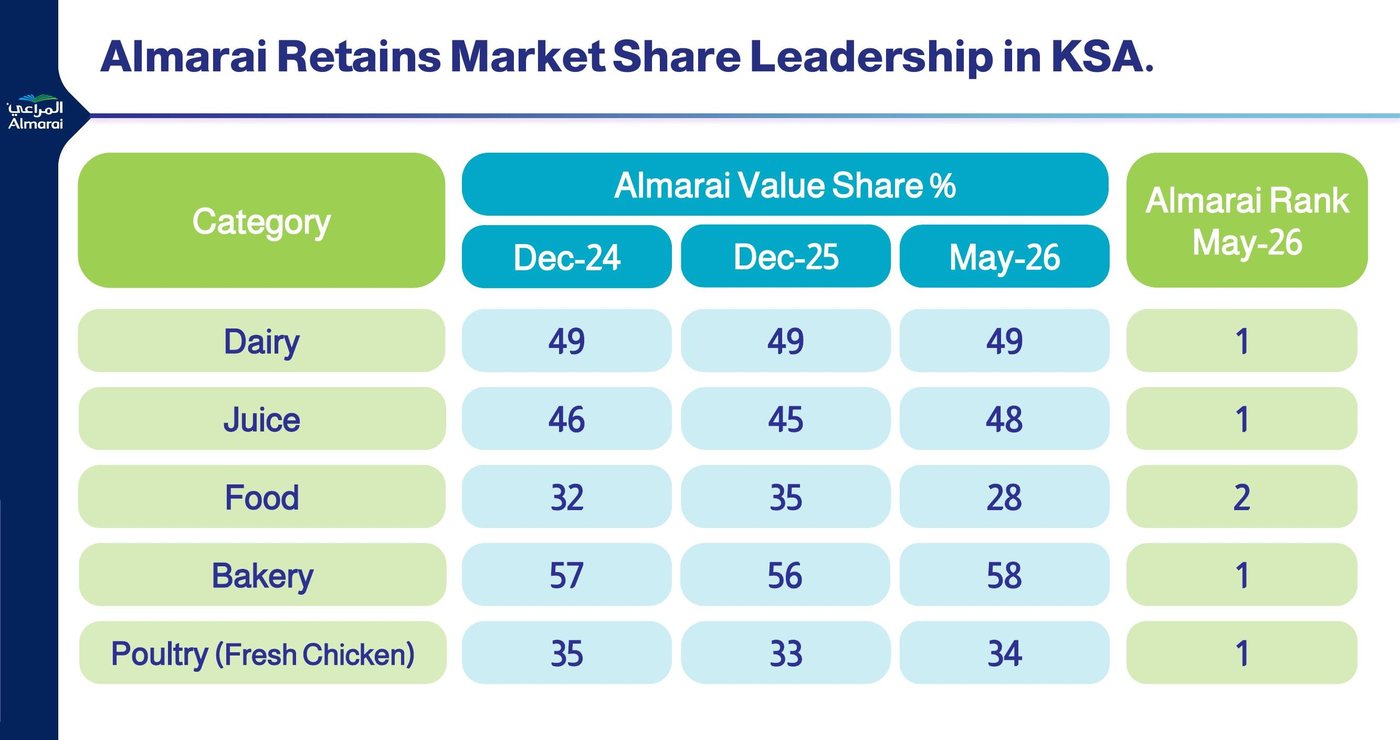
Protein added SAR 163 million of the SAR 580 million quarterly growth, about 28 percent of the total, more than any other category. Poultry itself held the number one position in fresh chicken at 34 percent value share in May, up from 33 percent in December 2025 but still below the 35 percent Almarai held in December 2024, a share that is recovering rather than simply climbing.
Egypt grew fastest of any market, revenue up 31 percent in riyal terms and 36 percent in local currency. The other significant number in the growth mix came from outside the food business entirely. Almarai closed its acquisition of Pure Beverages Industry Company, owner of the Ival and Oska bottled water brands, in a deal worth roughly SAR 1 billion. That acquisition alone added SAR 110 million to this quarter's growth, close to a fifth of the total increase.
Where the Profit Went
Operating profit was effectively flat, SAR 814 million against SAR 813 million a year earlier, even as revenue rose 11 percent. Almarai attributes this to “elevated energy, logistics, and protein ramp up costs,” offset by what it calls “rigorous cost discipline.” That much holds up as the direct, stated cost of building capacity. Net profit fell further than operating profit did, and the company's own bridge shows why. Pricing added SAR 123 million. Cost of goods sold cost SAR 56 million. Volume and mix added SAR 44 million. Operational costs, the ramp up line, cost SAR 66 million. Funding costs cost SAR 12 million, tied to higher debt. The single largest item working against profit was not operational: a SAR 44 million swing from the year-ago quarter, when Almarai booked a one-time gain reversing a Romania impairment charge that did not recur this year. Take that one item out, and profit would have gone up this quarter, not down.
The Capacity Bill Is Already Peaking
Net debt rose to SAR 13,336 million from SAR 11,966 million at the end of 2025, more than a billion riyal in six months, and Almarai names higher debt levels as the direct cause of this quarter's higher funding cost. Working capital rose SAR 690 million to SAR 4,766 million, which the company links to inventory built up against supply chain disruption affecting feed imports, part of a stated push to protect food security and supply, not slower sales. Both are real costs of running the business through a volatile input market. What is not accelerating is the capital program itself: CAPEX fell to SAR 879 million this quarter from SAR 1,001 million a year earlier, and Almarai's own materials describe the capital expenditure program as “continuing to taper down, having passed its peak investment phase.” The expansion that is supposed to be squeezing this year's margin is, by the company's own account, no longer the thing getting bigger.
The Next Big Play: Seafood
Of the nine new products in Almarai's second quarter innovation pipeline, five are seafood. Seama, the seafood brand, already sells Norwegian salmon in Saudi stores; that is not new. What is new is how much of the company's innovation effort now goes into it: two new salmon flavors and two new Mediterranean sea bass cuts launched in a single quarter, more new products than any other category in the pipeline got.
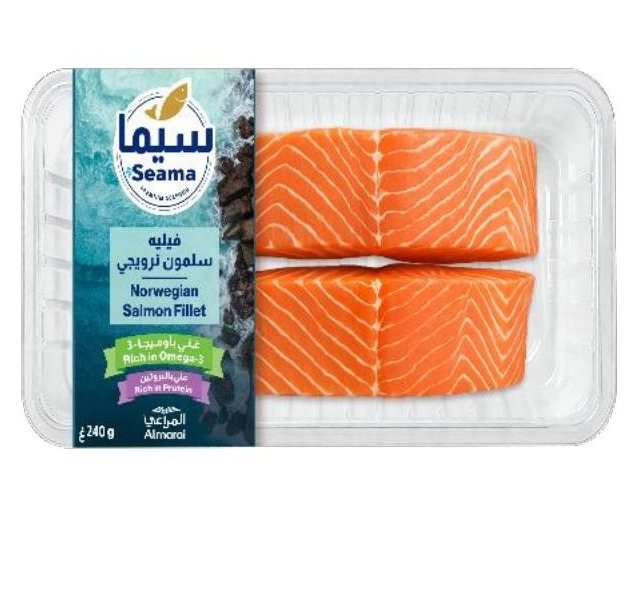
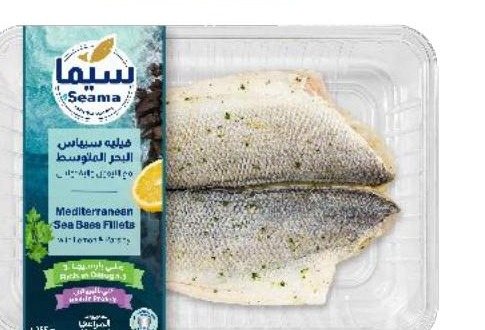
That is a company treating seafood as a real bet, not a side project, years before its own processing capacity exists to support it. Almarai has contracted three fish processing lines from JBT Marel, due to begin installation in late 2026 at a new facility in King Abdullah Economic City. Until then, every fillet on the shelf is imported and processed elsewhere, sold under a Saudi brand ahead of the capacity to make that true at home.
“Almarai is selling Norwegian salmon under a Saudi brand years before it can process a single fillet at home.”
The Same Fund's Other Bet
Saudi Arabia's Public Investment Fund is betting on both sides of this story at once. SALIC, PIF's agriculture and livestock arm, owns 16.32 percent of Almarai, the company now expanding poultry production inside the Kingdom. HPDC, a separate PIF subsidiary, owns a stake that can reach 40 percent in Sadia Halal, a company built to import and distribute Brazilian chicken instead, with a listing on the Saudi Exchange planned for 2027. One arm of the fund is paying to grow chicken at home. Another arm is paying to keep importing it. This quarter is the first time Almarai, the domestic side of that bet, has produced results real enough to judge. Sadia Halal has not gone public yet, so there is nothing yet to weigh against it.
Poultry is no longer a promise here, it is a number: the largest single driver of this quarter's growth, with a market share that is recovering rather than simply rising. The margin story is smaller than the headline suggests, a SAR 44 million accounting comparison rather than a structural cost. And Almarai is now running the same playbook in seafood that took years to pay off in poultry, years before the processing lines exist. SALIC's side of the fund's bet has a number to point to this quarter. HPDC's side still does not.
Signal source: Almarai Q2 2026 Earnings Presentation, 7 July 2026.