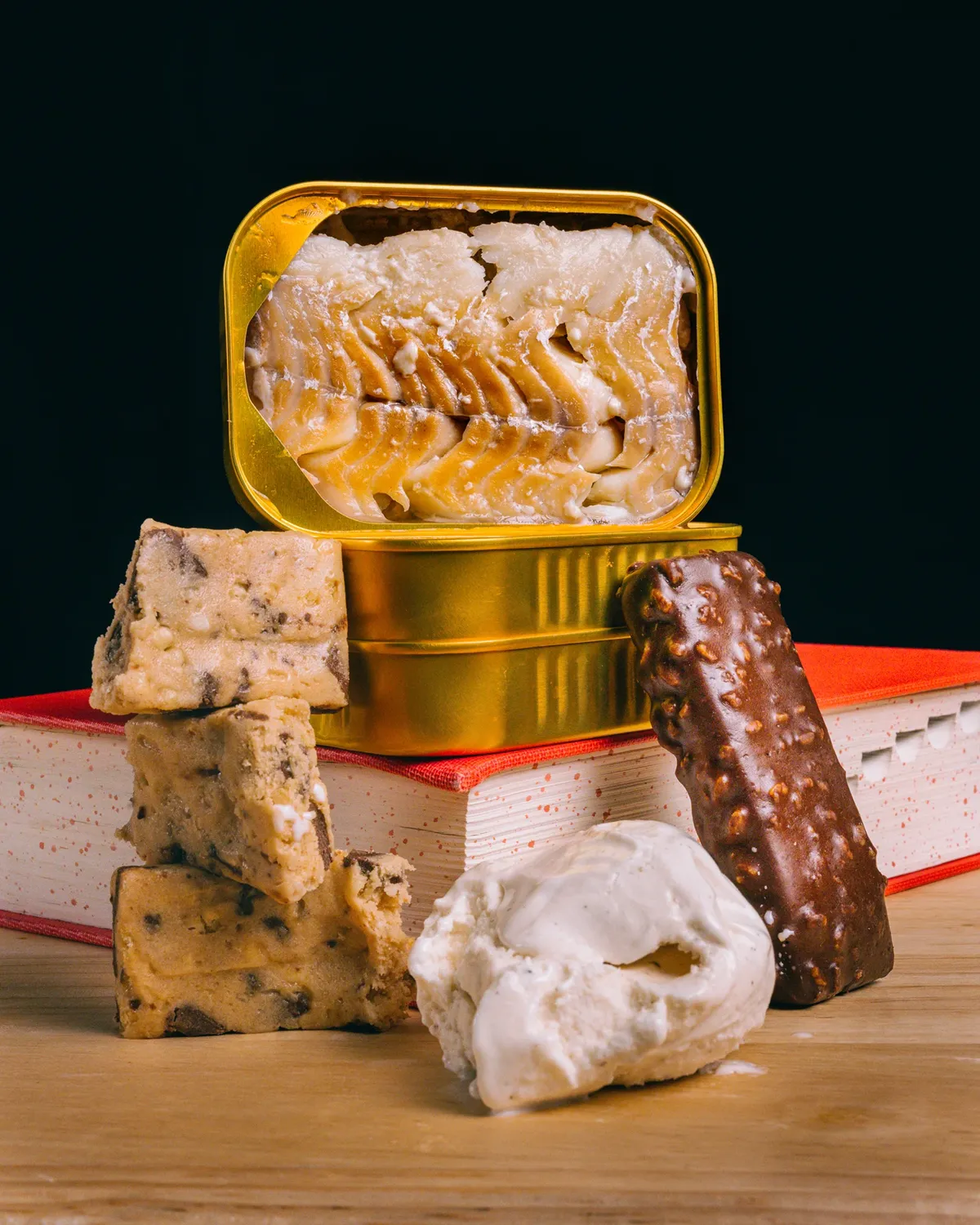
On June 1, David Protein launched its first ice cream pints online: $15 each, or six for $90. The pints carry 30 grams of protein and as few as 210 calories, against a category where a standard pint runs past 1,000. The entire run sold out in 28 minutes. The company expects $300 million in revenue this year, on a protein bar business that launched less than two years ago.
From $12,000 to a $2 billion exit
Peter Rahal is repeating a pattern that played out once before, with a different ingredient and a different founder. Justin Woolverton built Halo Top after hypoglycemia ruled out ordinary ice cream for him, spending two years reformulating the recipe before a 2012 launch. That first year, the brand brought in roughly $12,000 in revenue. The following two years were worse: by 2014 and 2015, Halo Top was being dropped from stores and surviving on the margins.
Then, in 2016, sales grew 2,500 percent. By year end, Halo Top had sold 28.8 million pints, generating $132.4 million. In 2017, revenue reached $347 million, and Halo Top outsold Ben & Jerry's and Haagen-Dazs in US grocery stores over the summer. In 2019, Wells Enterprises, maker of Blue Bunny, acquired the brand for an undisclosed sum that industry estimates placed close to $2 billion.
"In 2016, Halo Top's sales grew 2,500 percent; by year end it had sold 28.8 million pints, generating $132.4 million. The following year, revenue reached $347 million."
Halo Top's method was dilution: more air, more water, less fat. It worked commercially, but the texture told the truth. People who ate it knew they were eating a diet product.
What EPG changes
EPG, the ingredient behind David's pints, removes that tell. Esterified propoxylated glycerol behaves like fat in the mouth, with the richness and melt of full-fat dairy, but passes through the body largely undigested, the way fibre does. The calories the label avoids are calories the body never absorbs. Where Halo Top diluted its way to a lower number, David keeps the product the same and changes what the body does with it.
The market that made the case
Saudi Arabia did not need David's launch to know it wants this. Adult diabetes prevalence in the Kingdom stands at 23.1 percent, among the ten highest rates in the world. GCC industry forecasts name low-sugar, protein-enriched frozen desserts as the fastest-growing segment of the regional ice cream market through the end of the decade, for the same reason Halo Top's 2016 made obvious: a population with a sweet tooth and a diabetes problem needs the sweet tooth solved, not suppressed.
Almarai sells high-protein milk with no added sugar. NADEC and Danone's Gulf operations manufacture dairy at the scale required and run protein and low-sugar lines elsewhere in their portfolios. None sell an indulgent dessert built on an ingredient that removes the trade-off. What's missing is not capability. It's a decision to bring in, license or develop a fat substitute and build a brand around it.
Where this goes next
David is not a one-product story. Its parent company, Medici, is applying the same ingredient logic across categories. HallPass, an EPG-based candy brand, launches at Walmart this fall with peanut butter cups, wafer sticks and chocolate pieces priced the same as the originals they replace. A salty-snack line, Svelte Snacks, is also in development.
For Saudi Arabia, candy is not a side note. Sugar confectionery accounts for an estimated 30 to 35 percent of the Kingdom's $437 million sweets market by value, with roughly half of all candy consumption driven by everyday impulse snacking, according to industry estimates (Euromonitor). If EPG-style reformulation moves from ice cream into candy and salty snacks over the next year, the categories it reaches first in the Gulf will not be niche health-food aisles. They will be the shelves nearest the till.
The empty shelf
The market case for an EPG-style product in Saudi Arabia is, on paper, stronger than the case David made in the United States: higher diabetes prevalence, a frozen dessert category primed by trade reports to expect this kind of launch, and dairy infrastructure capable of producing and distributing at scale. The shelf is empty anyway, and not for lack of demand. That demand is the most documented part of this story.
Rahal's marketing, built on irony, controversy and a willingness to be disliked online, needs translation rather than import. The ingredient does not. Halo Top took four years to find its market and one more to dominate it. David took 28 minutes. Saudi Arabia has written the business case for both. It has not placed the order.
Signal source: Inc., “Inside David Protein's Playful and Provocative Billion-Dollar Playbook,” Jennifer Conrad, June 5, 2026 — inc.com.
Image source: Inc., “Inside David Protein's Playful and Provocative Billion-Dollar Playbook,” Jennifer Conrad, June 5, 2026 — inc.com.
References
- CNBC, “The future of ice cream looks a lot like Halo Top,” June 29, 2017 — cnbc.com
- CNBC, “How an ex-lawyer built Halo Top into an ice cream sensation with $347 million in sales,” Nov 1, 2018 — cnbc.com
- Food Dive, “Blue Bunny ice cream maker Wells Enterprises to buy Halo Top,” 2019 — fooddive.com
- World Bank / IDF Diabetes Atlas, Saudi Arabia diabetes prevalence (23.1%, 2024) — data.worldbank.org
- GCC Ice Cream Market Report 2026–2034 — vocal.media
- Euromonitor, Sugar Confectionery in Saudi Arabia (market estimates) — euromonitor.com
- Inc., “Inside David Protein's Playful and Provocative Billion-Dollar Playbook,” June 5, 2026 — inc.com